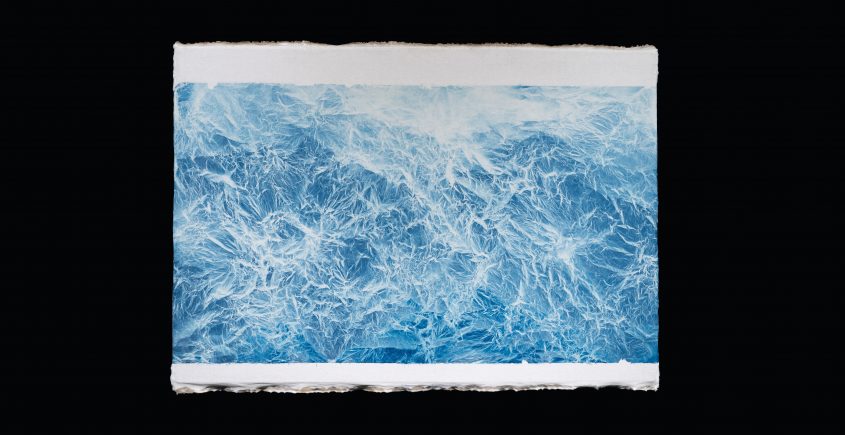
皴法習作之一百八十二
133 cm x 93 cm, 2026
In early May, Wu Chi-Tsung, in collaboration with Sean Kelly Gallery in New York, will donate his new work Wrinkled Texture 182 to the Asian Cultural Council1(ACC) 2026 Gala auction in support of its New York headquarters. Held at New York’s Rainbow Room, this year’s biennial gala will honor acclaimed actress Michelle Yeoh and Blanchette Hooker Rockefeller Award2 recipient Wendy O’Neill, continuing ACC’s more than six-decade mission of fostering cultural exchange between Asia and the United States.
Wu Chi-Tsung has long been committed to international cultural exchanges. Following his recent donations to ACC’s Hong Kong and Taiwan chapters, this contribution to its New York headquarters represents not only an act of support and a way of giving back, but also reflects the inspiration he drew from his residency in New York. Through this act, he hopes to carry forward these resources and values, supporting emerging artists and contributing to the continued development of the broader art ecosystem.
5 月初,吳季璁將與紐約 Sean Kelly Gallery 共同捐贈新作《皴法習作之一百八十二》,於亞洲文化協會1(ACC)2026 慈善晚宴上義賣,以支持 ACC 紐約總部。這場兩年一次的晚宴將於紐約 Rainbow Room 舉行,今年特別表彰知名演員楊紫瓊(Michelle Yeoh)與布蘭切特・胡克・洛克菲勒獎2(Blanchette Hooker Rockefeller Award)得主 Wendy O’Neill,延續 ACC 六十多年來推動亞洲與美國之間文化交流的使命。
吳季璁長期關注國際文化交流,去年亦曾捐贈作品支持 ACC 香港與台灣分會,這次捐贈給紐約總部,不只是對 ACC 的支持與回饋,更在回應紐約那段駐村經驗對他的啟發,希望能將這樣的資源與精神傳承下去,支持更多新銳藝術家,進而推動整體藝術環境的正向發展。
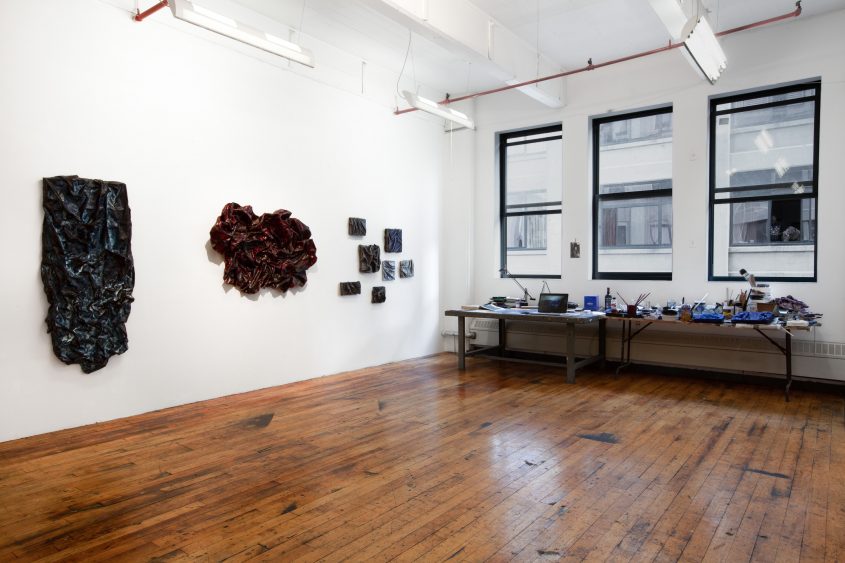
吳季璁 2013 年於紐約駐村期間,位於 Triangle Arts Association 的工作室
In 2013, Wu Chi-Tsung received an ACC fellowship to undertake a six-month residency in New York. He was prompted to apply after reading the catalogue of The Third Mind: American Artists Contemplate Asia, 1860–1989, organized by the Solomon R. Guggenheim Museum in 2009. This exhibition, which traced the profound influence of Asian art, literature, and philosophy on American modernism, led Wu to realize that Asian culture is not merely a passive reference within Western art, but an indispensable intellectual force, sparking his curiosity about New York’s contemporary art scene.
Having studied both traditional ink painting and Western painting from a young age, Wu shifted toward image-based practice during his university years, and has since continuously reflected on how to reconnect traditional painting with the language of the image. Beginning in 2003, his Wire series of installations transformed crumpled wire mesh into dynamic shan-shui (Chinese landscape) imagery through a slide-projection-like structure. In 2009, his Still Life series reinterpreted the motif of broken branches and flowers from traditional ink painting through the language of video, ingeniously translating pictorial “blank space” into light by filming underwater. In 2012, Wrinkled Texture drew inspiration from “cun-fa,” the brush techniques used to render the texture of rocks and mountain terrains in shan-shui painting. Wu coated Xuan paper with photosensitive cyanotype chemicals, crumpled it, and exposed it to sunlight, using photogram techniques to record the chance interplay of light and shadow on the wrinkled surface, creating images that evoke precipitous mountain forms. This creative trajectory, which continually weaves together Eastern and Western cultures and traditional and contemporary artistic practices, together with years of exhibiting and engaging in exchange across Europe, deepened Wu’s desire to travel to New York, a melting pot of culture and art.
2013 年,吳季璁獲得 ACC 藝術家獎助計畫,赴紐約進行為期六個月的駐村創作。申請的契機,來自他讀到紐約古根漢美術館 2009 年展覽「第三心靈:美國藝術家凝視亞洲, 1860–1989」的展覽畫冊——這個展覽追溯了亞洲藝術、文學與哲學如何在一百多年間深刻影響美國現代藝術運動,讓他意識到亞洲文化並非西方藝術的被動參照,而是其中不可或缺的智識養分,也因此對紐約的當代藝術現場充滿好奇。
自幼學習傳統書畫及西畫,大學期間轉向影像創作後,他便持續思考如何重新連結傳統繪畫和影像語言。2003 年開始的《鐵絲網》系列裝置作品,透過幻燈投影將揉皺的鐵絲網,轉換為動態的山水意象;2009 年開始的《小品》系列,則以錄像語言重新詮釋傳統水墨中折枝花卉的題材,巧妙地透過在水中拍攝,將繪畫中的留白轉換成影像中的光;2012 年的《皴法習作》,從傳統山水畫中描繪山石紋理的「皴法」獲取靈感,先將宣紙塗布氰版的感光藥劑,再揉皺放置在陽光下曝光,以直接攝影的手法記錄下揉皺的宣紙上隨機產生的光影,創造出宛如山巒絕壁的影像。這條持續融合東西文化和古今藝術的創作路徑,加上過去多年赴歐參展、交流的經驗,讓吳季璁更渴望親身前往紐約這個文化與藝術的熔爐。
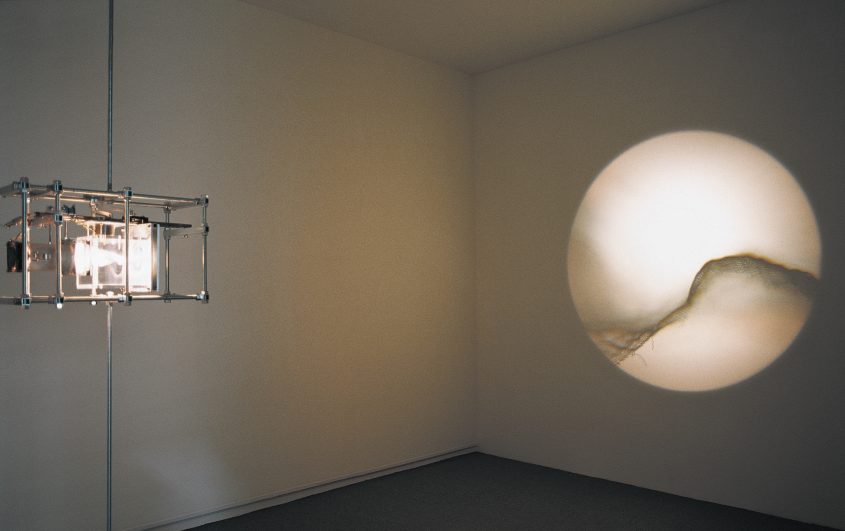
鐵絲網 I
Dimensions variable, 2003
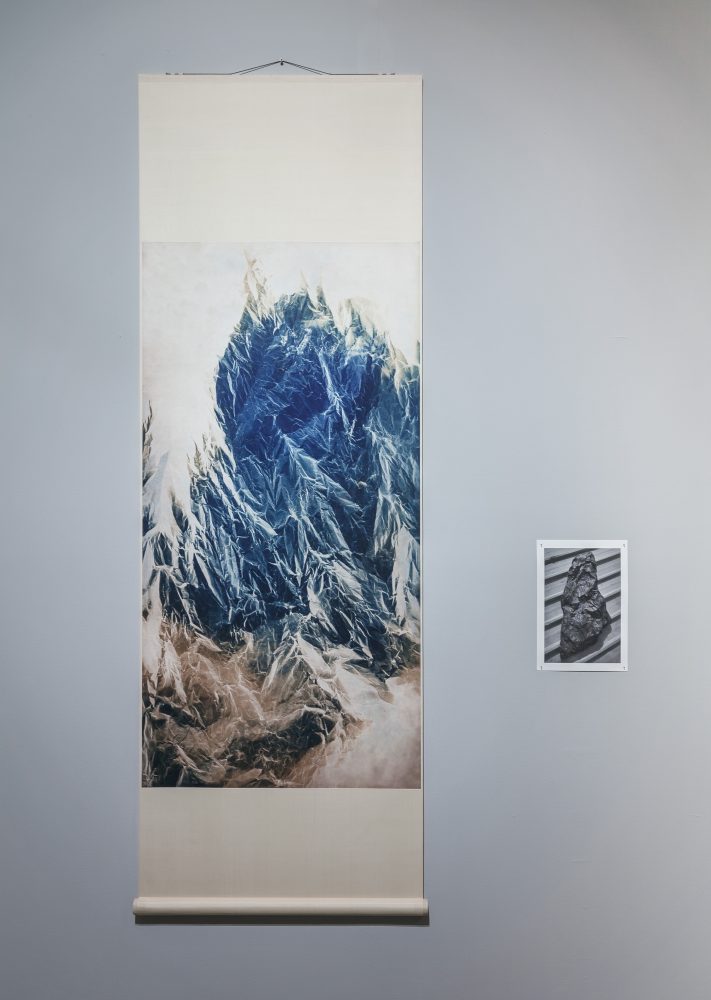
皴法習作 08
139 cm x 70 cm, 2012
However, once in New York, his practice took a direction entirely different from his original proposal. Wu is deeply grateful to ACC for the freedom it afforded him, allowing him to set aside his initial framework and turn instead toward an in-depth investigation of Western material traditions—including the preparation of traditional oil painting grounds, the structural mounting of canvas and stretcher, and the ways in which drapery in Greco-Roman sculpture articulates a sense of form and weight. This period of material experimentation ultimately developed into the Drapery Study series, laying a key technical and conceptual foundation for his subsequent practice.
然而真正到了紐約之後,創作卻走向一條與原定計畫全然不同的路。他十分感謝 ACC 給予充分自由,讓他可以放下原有框架,轉而深入研究西方藝術的材料傳統——包括傳統油畫的打底方式、畫布與畫框的裱褙結構,以及希臘羅馬雕塑中常見的衣紋(Drapery)如何呈現體感與量感。這段材料實驗,最終發展為《布紋習作》系列,也為日後的創作奠定了關鍵的技術與概念基礎。
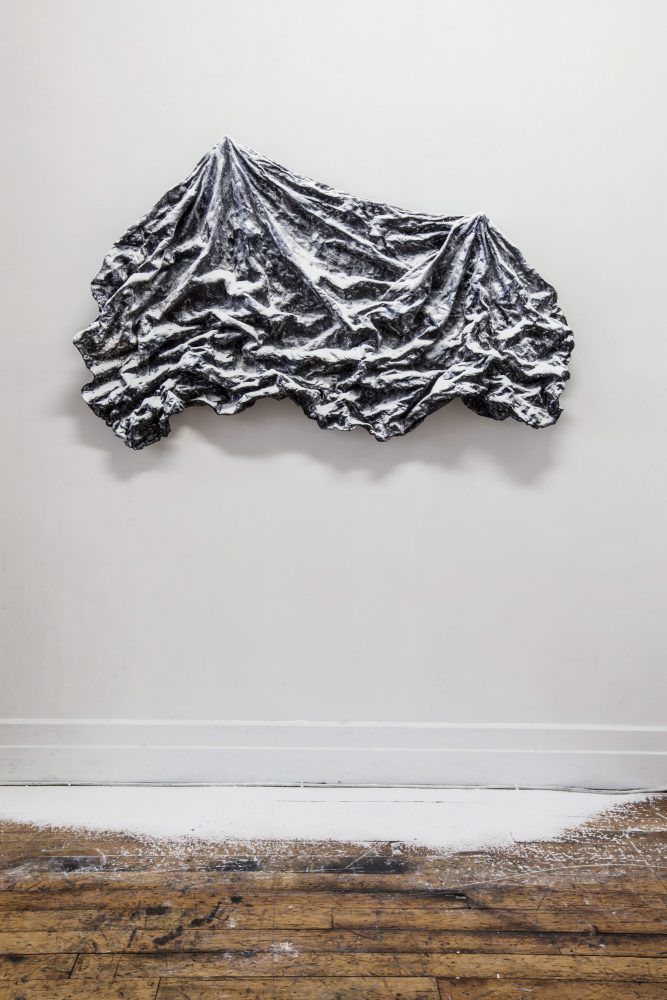
布紋習作 001
Dimensions Variable, 2014
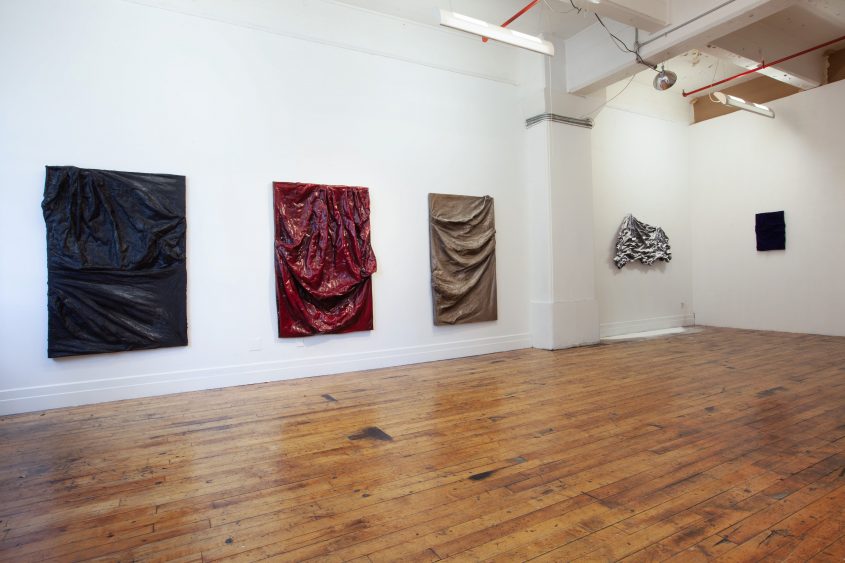
於紐約駐村期間創作的《布紋習作》系列
Wu Chi-Tsung once briefly served as an assistant to Ni Tsai-Chin through his friend Ni Yu-an (a fellow artist and Ni’s eldest son). Ni Tsai-chin was a prominent Taiwanese ink painter, art historian, and critic who had served as director of the National Taiwan Museum of Fine Arts. Deeply grounded in tradition while remaining widely engaged with contemporary art, Ni was known for his innovative contributions to ink painting. His 1991 essay “Western Art: Made in Taiwan” sparked widespread debate through its articulation of cultural subjectivity in Taiwan, while his representative work A Lost Country employed ink collage to depict the fractured terrain in the aftermath of the 1999 Jiji earthquake. Ni Tsai-chin’s work inspired Wu Chi-Tsung’s artistic practice, prompting him not only to reconsider Chinese cultural traditions, but also to develop a broader perspective on cultural subjectivity in Taiwan and even across Asia.
In early spring 2015, Ni Tsai-chin passed away after an illness. To pay tribute to this important mentor, Wu Chi-Tsung drew on Ni’s ink collage approach, combining the techniques of Wrinkled Texture with the material research of Drapery Studies to create the Cyano-Collage series in 2016. He adopted the preparatory techniques of classical realistic oil painting—mounting linen onto a wooden panel with rabbit skin glue and applying a gesso ground (methods developed while working on Drapery Study), before adhering Xuan paper onto the surface, securing it with acrylic medium, and finishing with varnish. From 2021 onward, Wu has continued his material experimentation, extending his supports to metal panels and harnessing their polished sheen to evoke the shifting light of the sky. The reflective properties of metal also lend a spatial dimension to what were once planar works, incorporating the light and shadow of the surrounding environment, along with the viewer’s perspective, into the work itself. The imagery of the Cyano-Collage series presents striking landscape motifs. Conceptually, it continues Wu’s integration of Eastern and Western traditions, past and present; materially, it brings together knowledge and techniques from both.
吳季璁早期因友人倪又安(藝術家,倪再沁長子),曾短暫擔任倪再沁先生的助手,他是台灣知名水墨畫家、藝術史學者暨藝評家,曾任國立台灣美術館館長,鑽研傳統亦廣泛涉獵當代藝術,在水墨上的創新更有所成就;1991 年發表的〈西方美術・台灣製造〉一文,對台灣主體性意識的論述在當時引發廣泛討論;代表作《失落的山河》以水墨拼貼形構出九二一大地震後山河碎裂的景象。吳季璁的創作上受到倪再沁先生的啟發,讓他不僅對於中國傳統文化改觀,對於台灣甚或亞洲的主體性意識,都有了更開闊的視野。
2015 年初春,倪再沁不幸病逝,為了紀念這位重要前輩,吳季璁借用其水墨拼貼的形式,結合《皴法習作》的製作手法與《布紋習作》的材料研究,於 2016 年創作出《氰山集》系列:以古典寫實油畫的打底方式——將麻布以兔皮膠粘附於木板、用 gesso 打底(正是在發展《布紋習作》時習得),上面再將宣紙,以壓克力膠貼覆固定,完成後上凡尼斯。2021 年起,吳季璁持續材質實驗,將基底材延伸至金屬板,利用其打磨後的光澤,創造出天空的光影;而金屬的反光特性,也為原來的平面作品帶來了立體的空間性,將周遭環境的光影及觀者的視角,納入成為作品的一部分。《氰山集》的影像呈現鮮明的山水意象,概念上延續其融合古今東西的藝術觀,而在製作上亦融匯東西方的材料學與技法。
Cyano-Collage-001-氰山集之一_180x407_2016_ss-845x564.jpg)
氰山集 001
180 cm X 407 cm, 2016
Accordingly, in Wrinkled Texture 182, the artwork donated to ACC this time, Wu deliberately preserves the exposed linen edges at the top and bottom, along with traces of sizing and ground, as a way of commemorating his material explorations in New York back in 2013. In terms of proportion, the head margin (sky) is broader than the foot margin (earth), echoing the classical scroll principle that the sky should be wider than the earth. The work thus resembles a fragment of a handscroll; what was once a planar surface between photography and painting is reconfigured into an object with a sculptural presence.
也因此,這次捐贈給 ACC 的《皴法習作之一百八十二》,刻意保留上下兩端裸露的麻布邊緣與上膠打底痕跡,正是為了紀念當年於紐約探索材料的過程。畫面比例上,上端(天)留白寬於下端(地),呼應傳統卷軸「天大於地」的古典原則,整件作品如一段被截取的卷軸,原本介於攝影與繪畫之間的平面,轉向帶有雕塑感的物件形式。
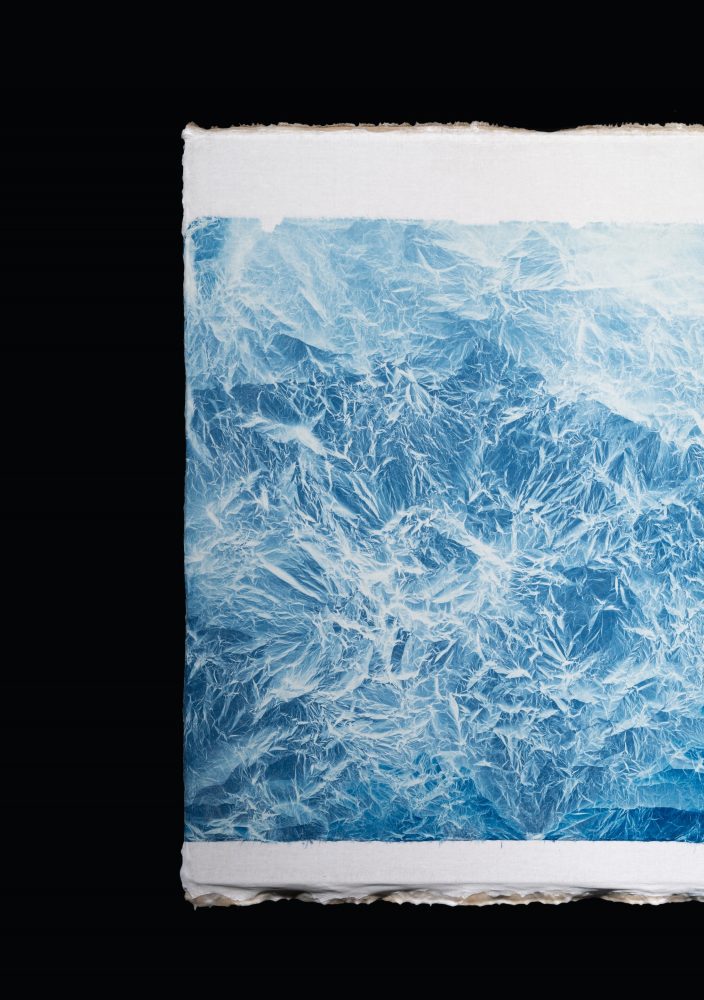
《皴法習作之一百八十二》局部照
“I used to prefer a cleaner finish—working toward a resolved form that could speak for the idea directly. But my mindset has shifted lately. There’s something closer to Happening in how I work now—looser, more open to the unexpected. What occurs in the process, what the material does on its own—I let it stay. It becomes part of the work.”
For Wu Chi-Tsung, Wrinkled Texture 182 is a unique and difficult-to-categorize work that sits between his Wrinkled Texture and Cyano-Collage series. It brings together elements from both while reflecting the evolution of his thinking over more than a decade. Through this work, he also hopes to express his sincere gratitude to ACC for its support at a pivotal moment in his artistic journey.
「從前我往往會把作品收得更乾淨,希望以純粹的形式清楚闡述觀念。但近期創作狀態有些改變,可以更放鬆的去做作品,讓創作過程中的偶發,和材質本身的特性,都自然而然成為作品的一部分。」
對吳季璁來說,《皴法習作之一百八十二》是一件特殊且難以歸類的作品,介於《皴法習作》和《氰山集》之間,融合了兩系列的元素,也回顧了他十餘年來想法的轉變;更希望藉此作品,向曾經在他藝術之路的關鍵時刻,給予支持的 ACC,表達由衷的感謝。
- The Asian Cultural Council (ACC), founded by the American philanthropist John D. Rockefeller III, is a global nonprofit organization headquartered in New York that supports and funds fellowship programs fostering cultural exchange between the United States and countries throughout Asia. Since its establishment in 1963, ACC has awarded more than USD 100 million in grants, supporting over 6,000 cultural exchanges across 16 artistic disciplines in 26 countries and regions.
亞洲文化協會(Asian Cultural Council, ACC)是一個在紐約創立並設立總部的全球性非營利組織,由美國知名慈善家約翰.洛克菲勒三世(John D. Rockefeller 3rd)創立,提供與募集獎助金,推動美國與亞洲各地的文化交流。自 1963 年成立以來,ACC 已挹注超過 1 億美金贊助 6 千多個文化交流,跨越 16 項藝術範疇,遍佈 26 個國家及地區。 ↩︎ - The Blanchette Hooker Rockefeller Award, established in 2009, commemorates the first chair of ACC and the wife of John D. Rockefeller III. Sharing her husband’s deep commitment to Asian art and culture, she was also guided by a vision of creating a better world. The award honors philanthropists who, in partnership with ACC, have made significant contributions to fostering international dialogue, understanding, and mutual respect between Asia and the United States.
布蘭切特・胡克・洛克菲勒獎(Blanchette Hooker Rockefeller Award)成立於 2009 年,以紀念 ACC 第一任主席,約翰・洛克菲勒三世(John D. Rockefeller 3rd)的妻子。洛克菲勒太太與丈夫共同有著對亞洲藝術及文化的熱誠,及創造一個更美好世界的願景。獎項表揚慈善家,他們與 ACC 合作,為發展亞洲及美國的國際對話、了解及尊重,作出良多貢獻。 ↩︎